
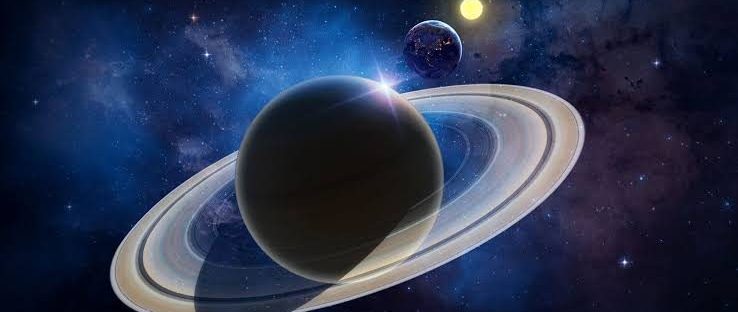
Have you ever wondered what it would be like if a planet could actually float? Well, the answer may surprise you: Saturn’s surface is less dense than water, meaning that it could actually float! That’s right, the gas giant that has been captivating us with its beautiful rings and stunning features since ancient times could actually float on water. Saturn is the sixth planet from the Sun and the second-largest in our Solar System. It is composed mainly of hydrogen and helium, giving it a lower density than water. This means that if placed in an environment where there was enough water to support its mass, Saturn would not sink – but rather float!
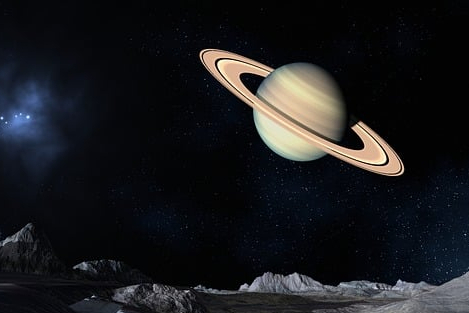
Saturn’s low density is due to its composition, which is mostly hydrogen and helium. This makes the planet less dense than water, meaning that if you put it in a giant bathtub of water, it would float. This is quite an amazing phenomenon considering the size of Saturn. It has a diameter of about 120,000 km, making it almost 10 times larger than Earth.But there’s more to Saturn’s low density than just its composition. The planet also has a lot of empty space inside it due to its internal structure. Its core is composed of heavy elementsuch as iron and nickel surrounded by a thick layer of liquid hydrogen and helium gas. This gas creates a light outer shell that gives Saturn its low density.
In conclusion, it is truly remarkable that Saturn’s surface is less dense than water. This means that if the planet were large enough and placed in a body of water, it would actually float! We can only imagine what a sight this would be – the majestic rings of Saturn glimmering on the surface of a lake or ocean. While we may never see this happen, it’s still an interesting fact about our solar system and its planets.
Rate Us 💫



 factuallyindian.data.blog